.png?width=698&height=417&name=%E5%AE%98%E7%B6%B2logo%20(1).png)


18. Nov. 2024
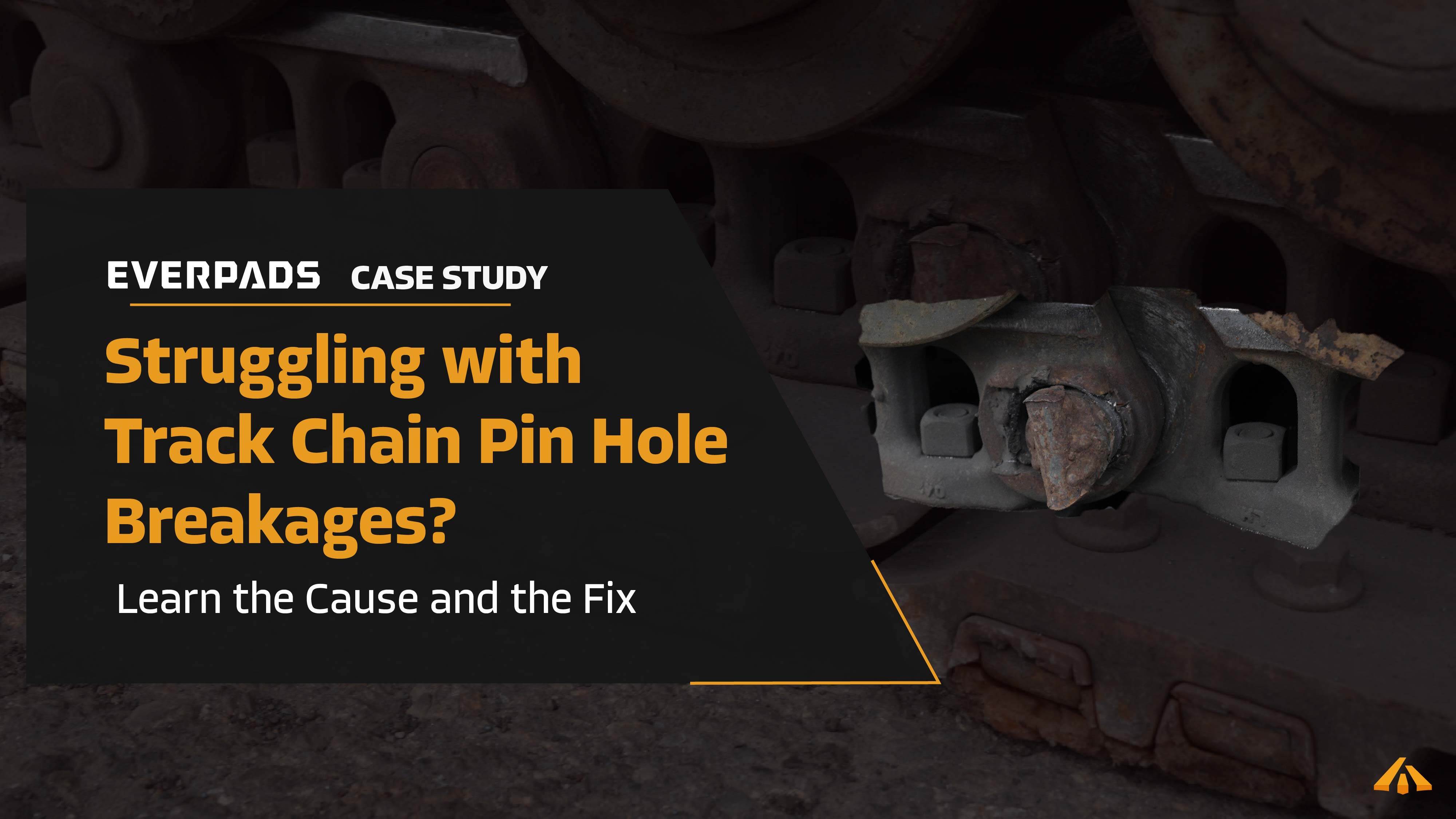
When evaluating track chains, pin hole failure should not be treated as the default failure mode of conventional designs. In most traditional track chains, the chain body reaches its wear limit before the pin hole becomes the primary failure point. As machines operate, the track chain rotates, subjecting the pins connecting each link to significant stress—especially when the chain lifts off the ground and just before it engages with the sprocket. This is when the highest shear forces are at play. However, when a track chain is marketed as ultra-wear-resistant or designed for a significantly extended service life, the pin hole area and bushing system become much more important. If these areas are not reinforced accordingly, they can become new reliability bottlenecks over the long term.
Potential buyers can gain access to professional milling solution insights from local dealers, helping them evaluate whether a long-life track chain has been fully upgraded—not only in wear life, but also in critical structural areas.
In this post, we’ll dive into how stress is distributed in track chains, why pin hole and bushing design matter more in extended-life chains, and how an innovative approach can offer a more reliable long-term solution.
Table of Contents:
1. Understanding Stress Distribution in Long-Life Track Chains
2. The Cost of Overlooking Long-Life Reliability Bottlenecks
3. Why Pin Hole and Bushing Reinforcement Matter in Extended-Life Track Chains
4. Our Innovative Solution for Track Chains
Understanding Stress Distribution in Long-Life Track Chains
In conventional track chains, the pin hole is usually not the primary lifespan bottleneck because the chain body often wears out first. However, once a track chain is engineered for a significantly extended service life, the pin hole area and bushing system become much more important. Due to their geometry and placement, these areas must then be evaluated more carefully as potential long-life reliability bottlenecks. Here’s why these areas matter more in extended-life chain design:
- Bending Stress: As the track chain engages with the ground and then lifts off, the pin hole area experiences repeated bending stress. Over a much longer service cycle, this cyclical stress can increase fatigue risk if the structure is not reinforced.
- Shear Stress: The relative movement between the pin and the surrounding structure generates shear stress. Over a longer total wear cycle, this repeated stress becomes more important to long-term reliability.
- Impact Stress: On uneven terrain or under high-load conditions, the pin hole area can endure intense impact stress. These sudden forces can accelerate fatigue in critical structural regions if the chain is expected to last much longer than conventional designs.
Together, these stresses do not necessarily make the pin hole the most common failure point in conventional chains. But once overall chain life is significantly extended, the pin hole area and bushing system deserve much closer attention because they may become the next limiting points in the system.
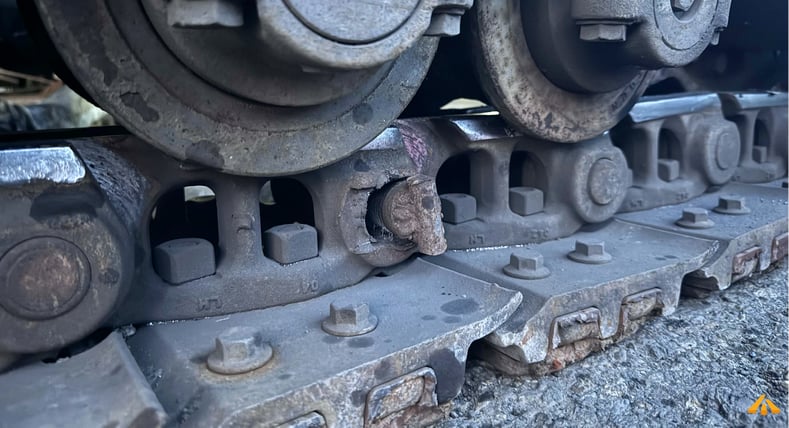 Example of pin hole damage in a traditional track chain
The Cost of Overlooking Long-Life Reliability Bottlenecks
If a manufacturer extends wear life in the chain body but does not strengthen the pin hole area and bushing system accordingly, the result may still be increased downtime, repair needs, and rising maintenance costs. For operators, it can also mean disrupted schedules, decreased productivity, and higher expenses—all due to an unbalanced design that could have been avoided with better engineering. Additionally, unexpected structural failure under load can pose serious safety risks. When a track chain breaks in a critical area, it can lead to sudden machine instability and increase the likelihood of accidents on the job site.
By not addressing these long-life reliability bottlenecks, manufacturers leave operators exposed to preventable risks. This highlights the importance of system-level design for both operational efficiency and worker safety.
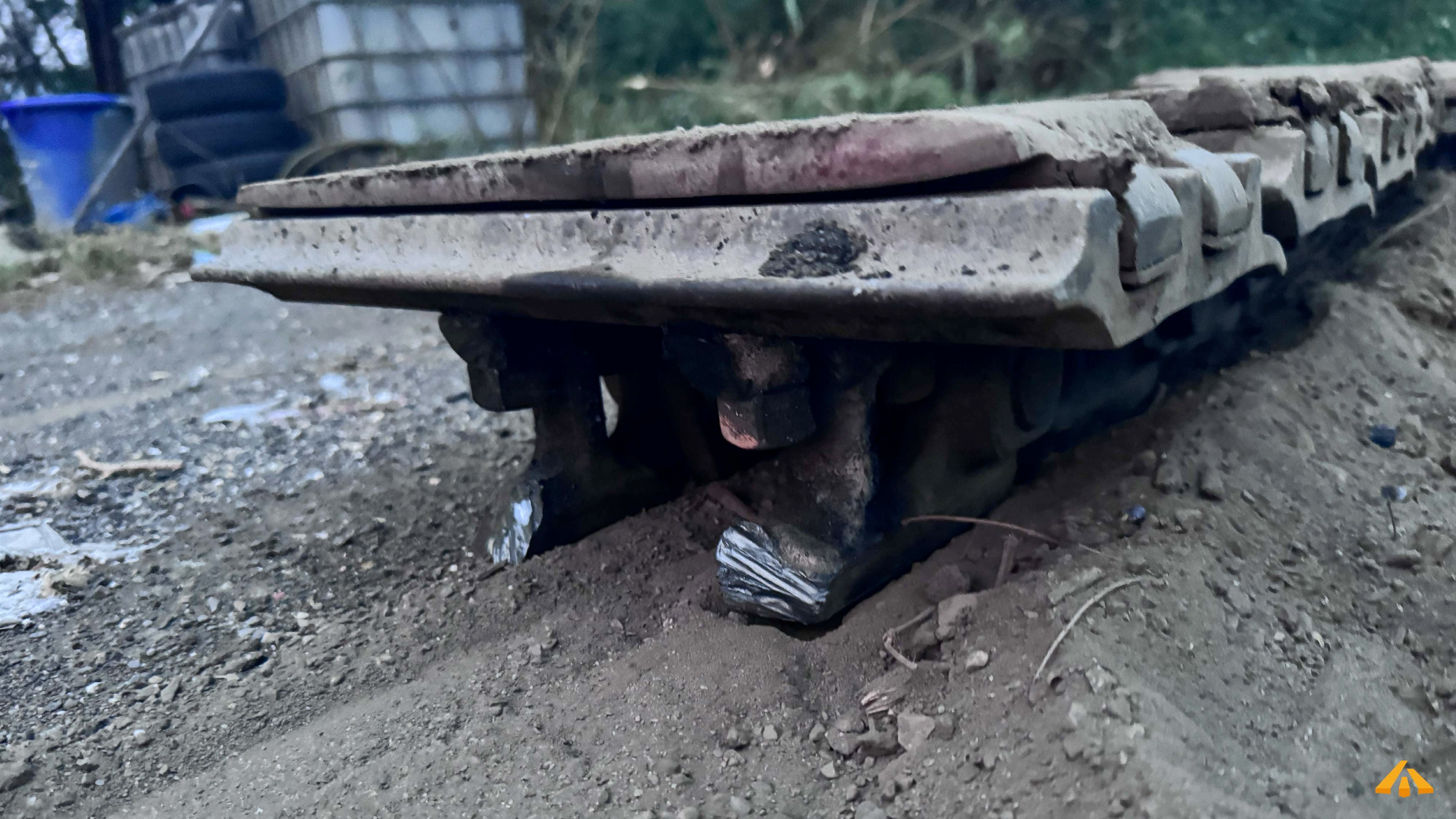 Typical full breakage of a traditional track chain, posing significant safety risks
Why Pin Hole and Bushing Reinforcement Matter in Extended-Life Track Chains
For conventional track chains, the chain body is usually worn out before the pin hole becomes the dominant end-of-life issue. However, when a chain is designed or marketed for a much longer service life, the situation changes. Once the body of the chain lasts much longer, the pin hole area and the bushing system may become new reliability bottlenecks unless they are also upgraded. Understanding these challenges is key to improving durability and performance in extended-life track chain design:
- High Stress Concentration: Critical structural areas such as the pin hole are exposed to repeated cyclic loads. In a long-life chain, this repeated loading must be managed more carefully to reduce fatigue risk.
- Wear Over a Longer Service Cycle: When a chain body lasts much longer, dimensional stability around the pin hole and the condition of the bushing system must also remain stable over that longer operating period.
- Insufficient Lubrication: Proper lubrication is crucial to minimize friction between pins, bushings, and chain links. A lack of lubrication increases friction and temperature, which can reduce long-term reliability.
- Material Fatigue: The repetitive loading and unloading cycles inherent in heavy machinery operations become more critical as expected service life increases. Over time, fatigue resistance in these structural regions becomes a key design factor.
- Manufacturing Defects: Imperfections such as improper heat treatment, material inconsistency, or dimensional inaccuracy can become more problematic in products expected to survive a much longer wear cycle.
Learn how to assess track chain design and quality: Tips to Evaluate the Probable Performance of a Track Chain on Each Indicator
Our Innovative Solution: X-Type Track Chain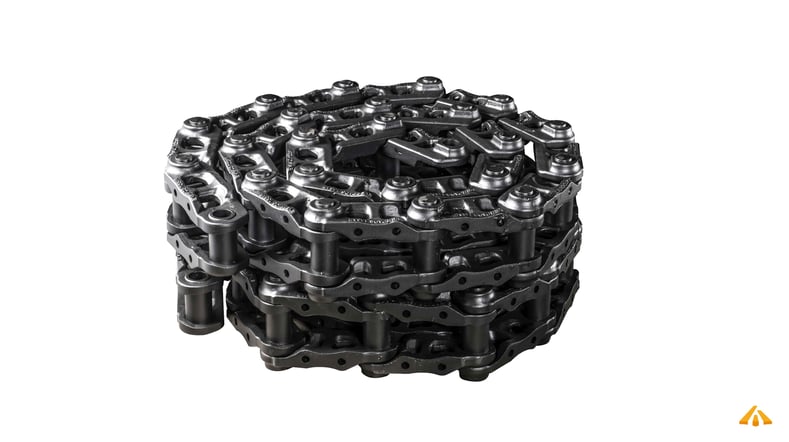
After years of research and testing, we’ve developed a robust solution for long-life track chains.
X-Type Track Chain Solution:
- Enhanced Pin Hole Thickness: Our advanced geometry increases pin hole thickness by 30%,
fortifying one of the critical structural areas and delivering an impressive 800 kN tear resistance.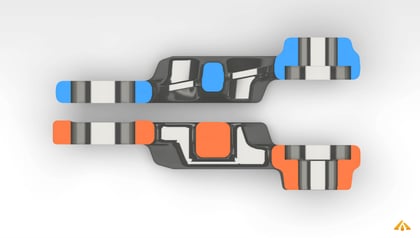
- Optimized Shape for Even Stress Distribution: We've integrated a steel ring within the pin hole to ensure more even stress distribution. This patented design significantly enhances the structural integrity of our track chain.
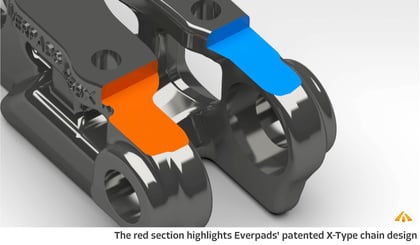
- Improved Bushing Design: Because our track chain is built for significantly longer wear life, the bushing system is also improved to better match the extended service cycle and maintain reliability over time.
- Forged for Durability: Our precision forging process, combined with ABP induction technology, deepens the wear resistance level. This helps the track chain withstand heavy-duty usage and harsh conditions without compromising performance.
- Automated Defect Detection: Our advanced quality control system uses automated detection to identify defects early, ensuring only the highest quality chains reach our customers.
This innovation not only extends the track chain’s lifespan but also helps ensure that the pin hole area and bushing system can match the longer overall service life of the chain. Our commitment to quality means operators of Cold Milling Machines can now rely on a track chain system that truly meets the demands of modern equipment with stronger full-system reliability.
Explore more about our X-type chain: Everpads X-type Track Chain for Cold Milling Machines
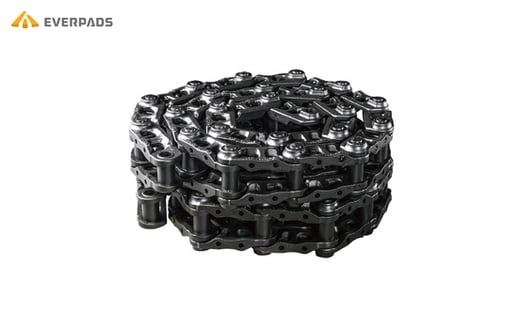
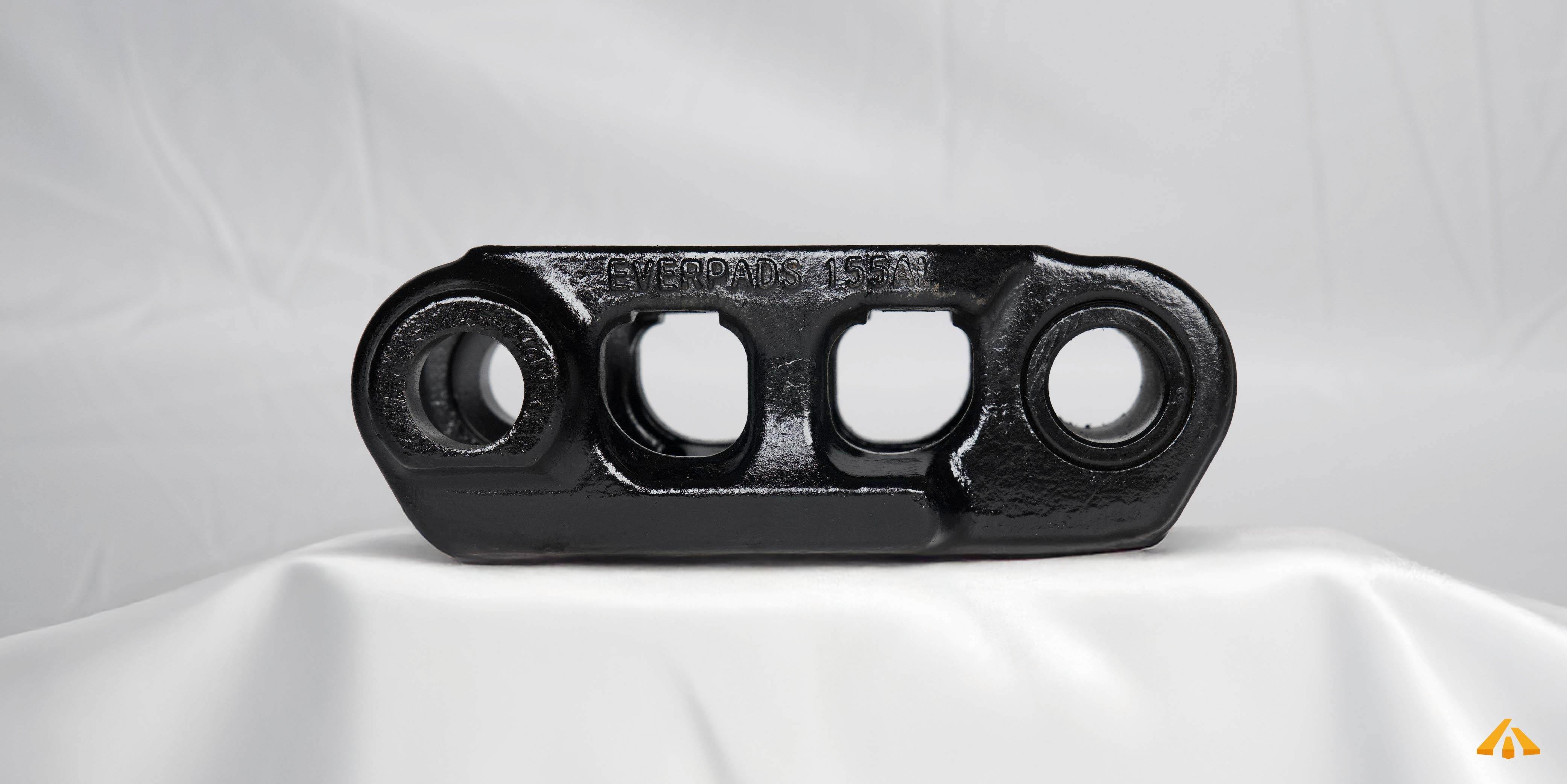 X-Type Track Chain
Why Don’t Other Manufacturers Fix This Issue?
Many manufacturers don’t prioritize pin hole and bushing reinforcement because, in conventional track chains, the chain body often wears out before these areas become the primary reliability bottleneck. They don’t always see the value in upgrading these critical areas if the rest of the system is not also designed for a similarly extended lifespan.
At Everpads, we take a different approach. We’ve extensively researched the common causes of early wear and failure across all undercarriage components—not just the track chain. By addressing each issue, we’ve developed patented solutions, advanced materials, and refined manufacturing methods. The result is a more complete system upgrade designed to meet today’s durability expectations. Every part of our track system is engineered to support a reliable three-year lifespan, not just the chain body alone.
This commitment ensures our customers get a truly robust, high-performance undercarriage solution built to handle the demands of heavy machinery without compromise.
Our Commitment to Real Solutions
At Everpads, we believe that true value means addressing the core challenges faced by operators, not just meeting minimum standards. Every product we create reflects this commitment, as we strive to enhance durability, reliability, and performance in ways that truly make a difference. You can tell a lot about a brand by the solutions it offers and the insights it shares.
Ready to Upgrade with More Confidence?
Pin hole failure should not be treated as the default problem of conventional track chains. But for chains claiming ultra-long wear life, pin hole and bushing reinforcement become critical evaluation points. With our innovative approach, Everpads offers a durable, high-performance track chain designed to meet the demands of today’s heavy machinery with stronger full-system reliability.
Choose reliability. Choose Everpads.
Articles you might also like:
Comprehensive Chain Assessing Tips for Asphalt Milling Machines
Although pin hole breakage is not usually the primary failure mode in conventional track chains, it becomes a more important evaluation point in chains that claim significantly extended wear life. There are also other valuable insights about chain failures worth understanding and addressing, including harsh environments and heavy loads. These machines operate under extreme conditions, enduring high temperatures and exposure to abrasive debris, which accelerates the wear and tear of the chain. The intense loads encountered during milling operations further increase stress on the chain system and can shorten service life if the design is not properly balanced.
To ensure optimal performance and longevity, it's essential to identify and address the full range of potential chain-related issues in your asphalt milling machines.
Curious to learn more about assessing track chain performance? Explore our in-depth blog post for expert insights and solutions: Track Chain Assessment Blog
Choosing the Right Milling Machine for Your Needs
Selecting the right milling machine for your project is crucial for achieving optimal results. The type of asphalt or concrete pavement you are working with, the maximum milling depth required, and the job site location are all critical factors to consider.....
Learn more: How to Choose the Right Milling Machine for Asphalt Milling