.png?width=698&height=417&name=%E5%AE%98%E7%B6%B2logo%20(1).png)


11. May. 2026
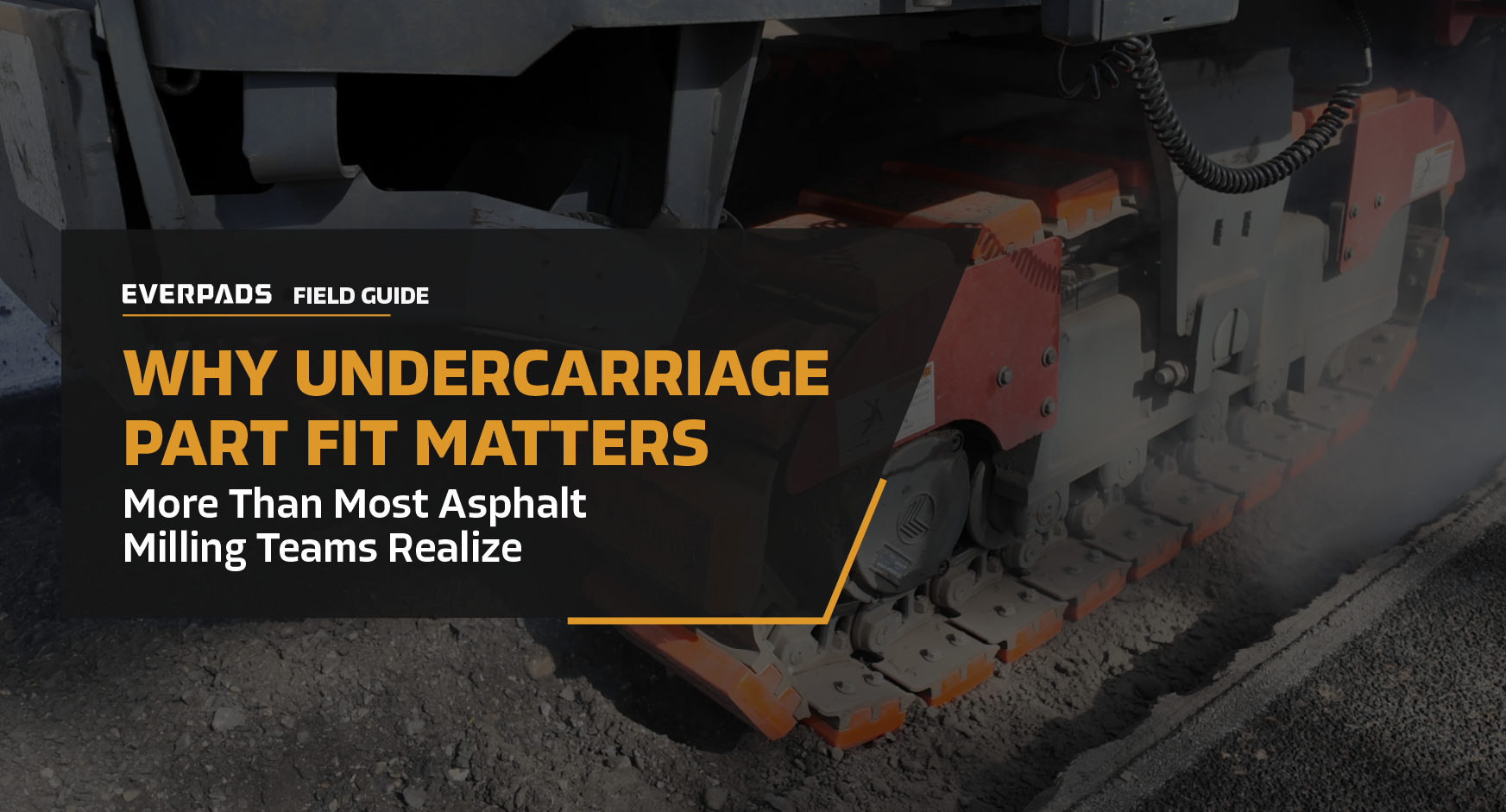
A cold milling machine undercarriage can still move — and still be wrong.
That is the part many teams miss.
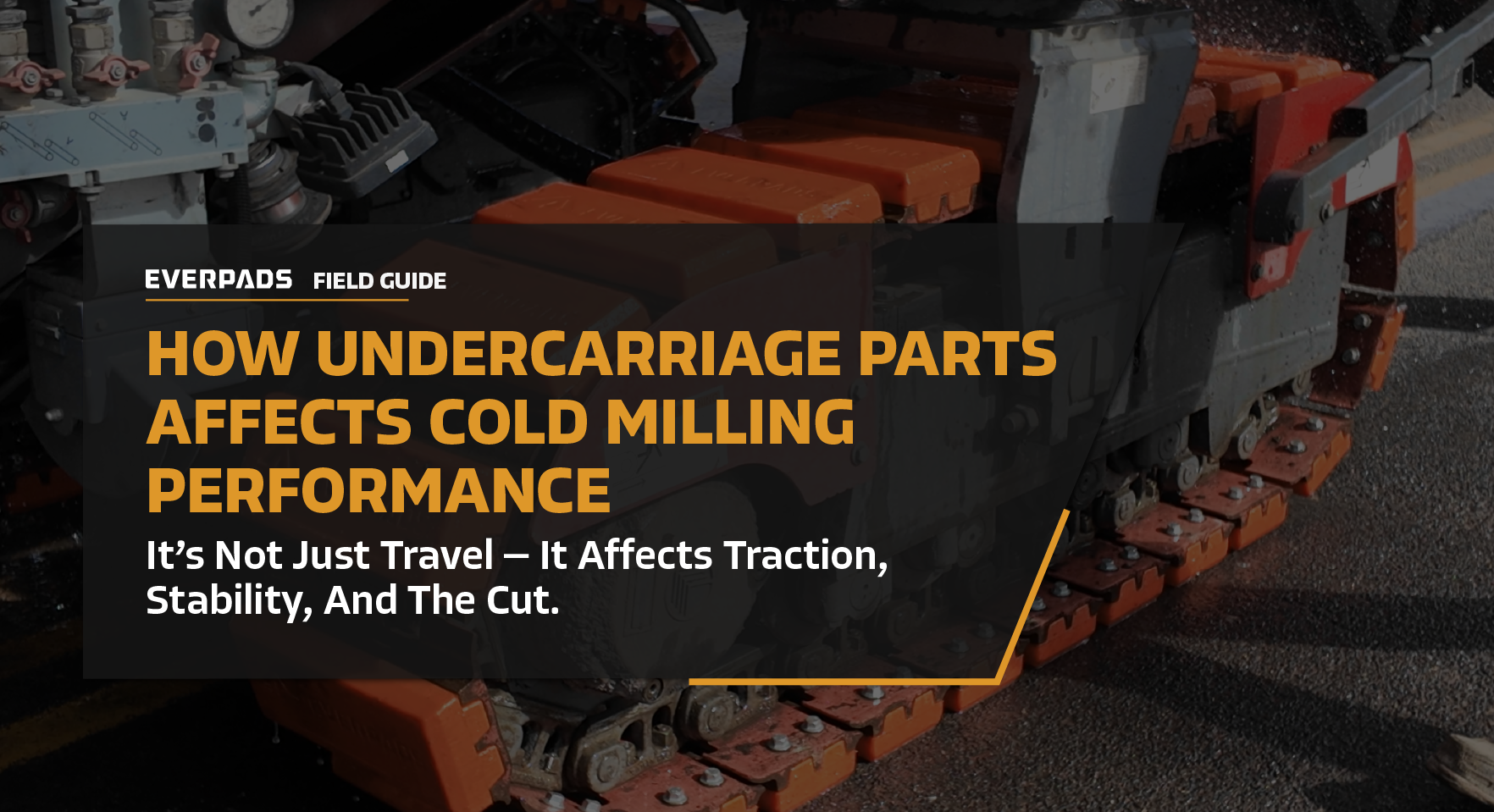
The real problem is not always that one component is simply worn out. In many cases, the deeper issue is that the undercarriage no longer fits and runs like a matched system. A crawler undercarriage is built to turn drive-system power into forceful forward motion for milling, and every major part in that system is built around reliable power transmission, stable tracking, and controlled load transfer. Track chains, drive sprockets, track pads, and track rollers do not work as isolated parts. They work as a matched geometry-and-contact system.
When that fit relationship drifts away from its intended state, the machine may still travel, but it no longer carries load, guides motion, or shares stress the same way. In the field, that usually shows up as rougher tracking, less stable traction, more vibration, faster spread of wear, and a machine that feels less planted under milling load.
https://parts.wirtgen-group.com/ocs/en-us/parts/undercarriage-crawler-drive-200-c/
https://parts.wirtgen-group.com/en-us/parts-guide/wirtgen/undercarriage-crawler-drive/track-chains/
https://parts.wirtgen-group.com/en-us/parts-guide/wirtgen/undercarriage-crawler-drive/undercarriage-crawler-drive-drive-sprockets/
https://parts.wirtgen-group.com/en-us/parts-guide/wirtgen/undercarriage-crawler-drive/track-rollers/
https://parts.wirtgen-group.com/en-us/parts-guide/wirtgen/undercarriage-crawler-drive/idlers/
https://h-cpc.cat.com/cmms/v2?cid=406&f=product&gid=283&it=product&lid=en&nc=1&pid=1000033333&sc=US
1. Why Fit Matters More Than Most Teams Realize
In a crawler undercarriage, fit is not a cosmetic issue.
It is a performance issue.
Once the relationship between chains, sprockets, rollers, idlers, guides, slide bars, and support surfaces drifts away from its intended condition, the machine may still move — but it will not carry load, guide motion, or share stress the same way. That change usually shows up as rougher tracking, less stable traction, higher vibration, and faster secondary wear.
And that matters directly to milling. Milling depth and surface consistency do not depend on the drum alone. They also depend on a stable machine platform. If the undercarriage is no longer running consistently, the machine becomes less predictable in how it carries the cut, especially under load. Traction control, alignment, and tracking all influence how cleanly the machine moves through the cut and how much unnecessary wear the undercarriage absorbs.
https://parts.wirtgen-group.com/ocs/en-us/parts/undercarriage-crawler-drive-200-c/
https://www.wirtgen-group.com/en-us/products/wirtgen/technologies/leveling-technology/leveling-systems/level-pro/
https://h-cpc.cat.com/cmms/v2?cid=406&f=product&gid=283&it=product&lid=en&nc=1&pid=1000033333&sc=US
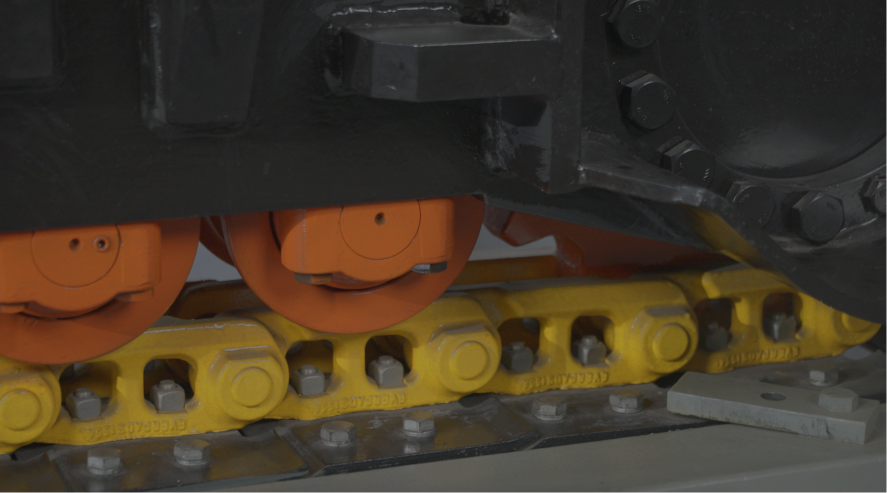
2. What “Part Fit” Really Means
In this context, fit does not simply mean “tight.”
Good fit means the parts still have the right size, profile, form, location, contact pattern, support relationship, and intended running play to function together correctly.
That is what allows the system to guide the chain correctly, transmit drive force correctly, protect the frame correctly, and distribute load correctly.
This is the practical meaning of functional geometry. The features that control real undercarriage behavior are not decorative. They are the tooth forms, guide surfaces, contact faces, running clearances, mounting relationships, and support geometries that determine whether the system still works the way it was designed to work.
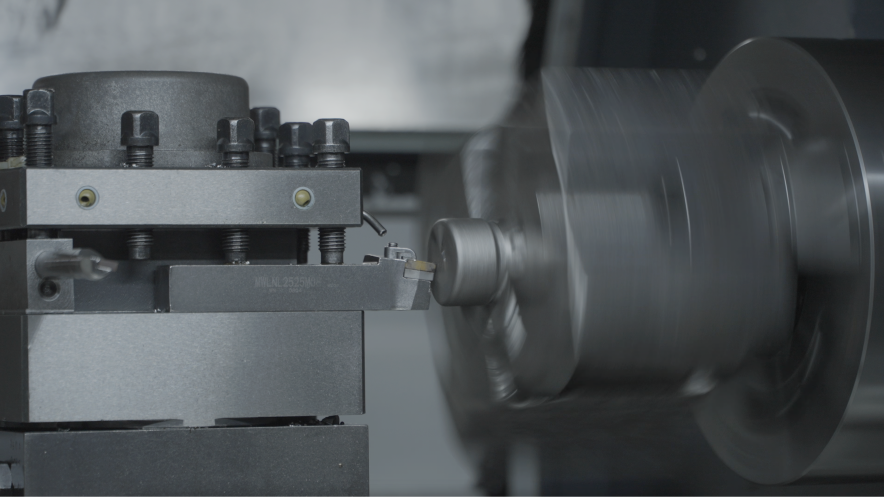
Precision machining matters here for one reason: if the function depends on geometry, the geometry has to be held consistently. That is the manufacturing foundation behind real fit.
https://tsapps.nist.gov/publication/get_pdf.cfm?pub_id=936463
https://nvlpubs.nist.gov/nistpubs/Legacy/IR/nistir5628.pdf
https://www.iso.org/standard/55295.html
3. How Poor Fit Starts Hurting Milling Performance
Poor fit rarely stays local.
It spreads.
If chain fit and running geometry deteriorate, traction becomes less clean. If rollers no longer share load correctly, friction rises. If idlers and guides are no longer supported correctly, vibration grows. If sprocket geometry no longer matches the chain properly, pressure rises where it should not. If slide bars no longer keep the chain protected from the frame, wear spreads outward into the machine.
That is why undercarriage fit problems often show up first as performance problems:
- the machine feels rougher
- steering feels less clean
- tracking gets noisier
- propel effort rises
- repeat wear appears sooner than expected
- milling stability starts dropping even before a complete failure occurs
Chain behavior makes this especially clear. Too much tension reduces the necessary play between bushes and pins and accelerates wear. Too little tension creates undulating chain motion, rubbing on rollers and sprockets, and eventually throw risk. Once the system stops running in its intended geometry, wear and instability accelerate together.
https://parts.wirtgen-group.com/en-us/parts-guide/wirtgen/undercarriage-crawler-drive/track-chains/
https://parts.wirtgen-group.com/en-global/parts-guide/wirtgen/undercarriage-crawler-drive/track-chains/
https://parts.wirtgen-group.com/en-us/parts-guide/wirtgen/undercarriage-crawler-drive/undercarriage-crawler-drive-drive-sprockets/
https://parts.wirtgen-group.com/en-us/parts-guide/wirtgen/undercarriage-crawler-drive/track-rollers/
https://parts.wirtgen-group.com/en-us/parts-guide/wirtgen/undercarriage-crawler-drive/idlers/
https://parts.wirtgen-group.com/en-global/parts-guide/wirtgen/undercarriage-crawler-drive/chain-slide-bars/
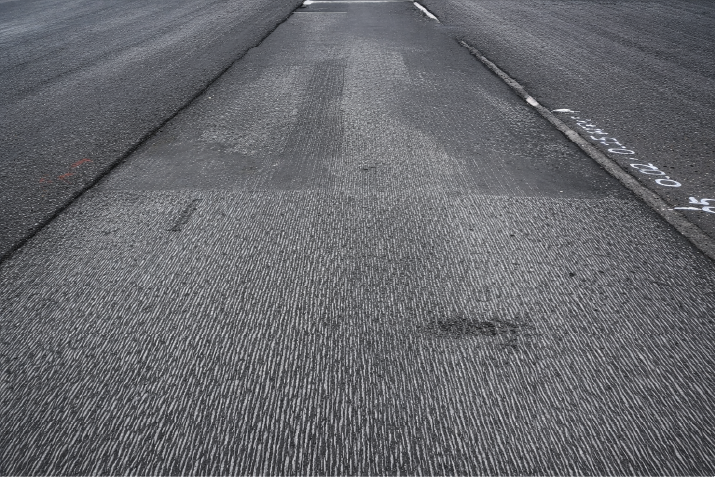
4. Where Fit Usually Breaks Down First
Chain-to-Sprocket Engagement
A worn sprocket does not simply “have less material.” It has different geometry.
As sprocket wear progresses, tooth-flank separation increases, pressure on pins and bushes rises, and chain wear or elongation accelerates. That is why a worn sprocket paired with a new chain often destroys the benefit of the replacement. The chain may be new, but the engagement geometry is already wrong.
https://parts.wirtgen-group.com/en-us/parts-guide/wirtgen/undercarriage-crawler-drive/undercarriage-crawler-drive-drive-sprockets/
https://parts.wirtgen-group.com/en-global/parts-guide/wirtgen/undercarriage-crawler-drive/undercarriage-crawler-drive-drive-sprockets/
https://parts.wirtgen-group.com/en-ua/parts-guide/wirtgen/undercarriage-crawler-drive/undercarriage-crawler-drive-drive-sprockets/
Roller Load-Sharing
Track rollers carry the full machine weight.
Once roller condition drifts, load-sharing drifts with it. A leaking or seized roller does not only affect that single position. It raises friction, increases the energy needed to propel the track unit, accelerates chain wear, and pushes more stress into adjacent parts. When rollers are running with mixed wear states, load is no longer shared evenly, and premature failure becomes much more likely.
https://parts.wirtgen-group.com/en-us/parts-guide/wirtgen/undercarriage-crawler-drive/track-rollers/
https://parts.wirtgen-group.com/en-global/parts-guide/wirtgen/undercarriage-crawler-drive/track-rollers/
https://parts.wirtgen-group.com/en-in/parts-guide/wirtgen/undercarriage-crawler-drive/track-rollers/
Idler Guide Support and Frame Contact
This is one of the clearest real-world examples of lost fit.
When the idler guide begins projecting outside the undercarriage frame, the system is already telling you that chain wear and support geometry have moved out of their proper range. Once the guide is no longer fully supported where it should be, vibration rises, bearings are exposed to abnormal load, and relative movement begins wearing both the idler bracket and the frame. At that point, the issue is no longer just component wear. It is support-geometry loss.
https://parts.wirtgen-group.com/en-us/parts-guide/wirtgen/undercarriage-crawler-drive/idlers/
https://parts.wirtgen-group.com/en-global/parts-guide/wirtgen/undercarriage-crawler-drive/idlers/
https://parts.wirtgen-group.com/en-za/parts-guide/wirtgen/undercarriage-crawler-drive/idlers/
Chain Slide Bars and Chain-to-Frame Protection
Chain slide bars look secondary.
They are not.
They control whether the chain stays protected from direct frame contact. Once they are worn, friction rises, chain life drops, and frame wear begins spreading. That is why worn slide bars are not a small maintenance detail. They are part of the fit system.
Good Fit vs. Poor Fit
| Condition | Good Fit | Poor Fit |
|---|---|---|
| Chain-to-sprocket engagement | Smooth, matched contact | Pressure rises, wear accelerates |
| Roller load-sharing | Even load across rollers | Uneven load, friction, premature wear |
| Idler guide support | Stable in-frame support | Vibration, movement, frame wear |
| Chain travel | Smooth, controlled motion | Undulating motion, rubbing, throw risk |
| Machine behavior | Stable, planted, predictable | Rougher tracking, noisier running, less stable cut |
| Maintenance outcome | Longer predictable service life | Repeat wear, repeat repair, repeat downtime |
This table captures the difference between a system that still fits and a system that is already drifting out of control.
https://parts.wirtgen-group.com/en-us/parts-guide/wirtgen/undercarriage-crawler-drive/track-chains/
https://parts.wirtgen-group.com/en-us/parts-guide/wirtgen/undercarriage-crawler-drive/undercarriage-crawler-drive-drive-sprockets/
https://parts.wirtgen-group.com/en-us/parts-guide/wirtgen/undercarriage-crawler-drive/track-rollers/
https://parts.wirtgen-group.com/en-us/parts-guide/wirtgen/undercarriage-crawler-drive/idlers/
https://parts.wirtgen-group.com/en-global/parts-guide/wirtgen/undercarriage-crawler-drive/chain-slide-bars/
5. How To Tell The Fit Is No Longer Right
You do not need a metrology lab to know the fit is already being lost.
You need to know what to look for.
Common warning signs:
- repeat chain wear after replacement
- a new chain wearing quickly against an old sprocket path
- abnormal vibration
- rough or noisy tracking
- rising propel effort
- uneven wear across rollers
- idler guides no longer sitting where they should
- wear spreading together across chains, rollers, guides, and sprockets
- the machine feeling less planted during milling
These are not random failures. They are system-fit symptoms.
https://parts.wirtgen-group.com/en-us/parts-guide/wirtgen/undercarriage-crawler-drive/track-chains/
https://parts.wirtgen-group.com/en-us/parts-guide/wirtgen/undercarriage-crawler-drive/track-rollers/
https://parts.wirtgen-group.com/en-us/parts-guide/wirtgen/undercarriage-crawler-drive/idlers/
Symptom → Likely Fit Problem → What To Check First
| Field symptom | Likely fit problem | What to check first |
|---|---|---|
| New chain wears too fast | Worn sprocket profile or unresolved adjacent wear path | Sprocket tooth form, chain path, slide bars |
| Rough tracking or vibration | Chain guidance or idler support is no longer correct | Chain tension, idler guide position, frame contact area |
| Higher propel effort | Friction is increasing in the running system | Rollers, chain path, seized components |
| Uneven roller wear | Load-sharing is no longer balanced | Roller condition as a set, support alignment |
| Guide projecting outside frame | Excessive chain wear or support geometry drift | Idler guide position, chain wear, frame contact condition |
| Machine feels less planted in cut | Undercarriage consistency is affecting platform stability | Overall undercarriage fit, traction consistency, wear spread pattern |
This is the practical shift customers need to make: stop asking only, “Which part looks bad?” and start asking, “Which fit relationship has already been lost?”
https://parts.wirtgen-group.com/en-us/parts-guide/wirtgen/undercarriage-crawler-drive/track-chains/
https://parts.wirtgen-group.com/en-us/parts-guide/wirtgen/undercarriage-crawler-drive/track-rollers/
https://parts.wirtgen-group.com/en-us/parts-guide/wirtgen/undercarriage-crawler-drive/idlers/
https://parts.wirtgen-group.com/en-us/parts-guide/wirtgen/undercarriage-crawler-drive/undercarriage-crawler-drive-drive-sprockets/
6. Why Replacing One Part Often Does Not Solve The Problem
This is where many repairs fail.
The visibly bad part gets replaced.
The system relationship does not.
That is why the same symptom often comes back.
This is not bad luck. It is bad restoration logic.
Chains and sprockets run as matched profiles. Worn sprockets accelerate wear on new chains. Worn slide bars allow chain-path damage to continue. Rollers with uneven wear states create uneven loading. Idler and frame support conditions can drift so far that replacement alone is no longer enough.
So the real goal is not simply to replace the failed part. The real goal is to restore the undercarriage to a state where it fits and runs as a system again.
https://parts.wirtgen-group.com/en-us/parts-guide/wirtgen/undercarriage-crawler-drive/track-chains/
https://parts.wirtgen-group.com/en-us/parts-guide/wirtgen/undercarriage-crawler-drive/undercarriage-crawler-drive-drive-sprockets/
https://parts.wirtgen-group.com/en-global/parts-guide/wirtgen/undercarriage-crawler-drive/chain-slide-bars/
https://parts.wirtgen-group.com/en-us/parts-guide/wirtgen/undercarriage-crawler-drive/idlers/
https://parts.wirtgen-group.com/en-us/parts-guide/wirtgen/undercarriage-crawler-drive/track-rollers/
7. Why Precision CNC Is The Credible Solution
This is the right place to bring in CNC.
Not as hype.
As mechanism.
If undercarriage performance depends on functional fit, then the replacement part must be made so that the function-critical geometry is controlled and repeatable.
That is the real value of precision CNC.
Precision machining is not just about making parts look better. It is about repeatedly producing the size, form, location, and contact geometry that the system depends on. If those features drift, fit drifts. If fit drifts, running behavior drifts. And once running behavior drifts, traction, wear, vibration, and milling stability all deteriorate together.
Bad geometry becomes bad fit.
Bad fit becomes bad running behavior.
Bad running behavior becomes lost traction, accelerated wear, vibration, repeat service, and weaker milling stability.
https://nvlpubs.nist.gov/nistpubs/Legacy/IR/nistir5628.pdf
https://tsapps.nist.gov/publication/get_pdf.cfm?pub_id=936463
https://www.iso.org/standard/55295.html
https://www.haascnc.com/service/troubleshooting-and-how-to/how-to/renishaw-ballbar-test---plot-interpretation---mills.html
Why Precision CNC Matters
| What the customer sees | What is really happening | Why precision CNC matters |
|---|---|---|
| Parts install, but wear returns too quickly | Functional geometry was not truly restored | Critical features must be machined consistently |
| New parts do not run like expected | Mating relationships are already off | Size, form, and location control matter |
| Undercarriage runs rougher over time | Contact paths and support geometry drift | Repeatable machining helps restore intended fit |
| Repair does not stop repeat failure | The system was reassembled, but not truly re-matched | CNC repeatability supports system-level fit restoration |
The real solution story is not “premium quality” in a vague sense. It is controlled geometry, repeatable fit, and restored system behavior.
https://nvlpubs.nist.gov/nistpubs/Legacy/IR/nistir5628.pdf
https://tsapps.nist.gov/publication/get_pdf.cfm?pub_id=936463
https://www.iso.org/standard/55295.html
https://www.haascnc.com/service/troubleshooting-and-how-to/how-to/renishaw-ballbar-test---plot-interpretation---mills.html
8. FAQ
What does undercarriage part fit actually mean?
It means the chains, sprockets, rollers, idlers, guides, and support surfaces still match and load each other as intended. It is not just about whether the part is loose or tight. It is about whether the system still has the correct geometry, contact, and intended play to run correctly.
How can I tell when undercarriage parts no longer fit correctly?
Typical signs include repeat wear after replacement, abnormal vibration, rough tracking, guide projection, rising friction, and wear spreading into adjacent parts. When the same symptom returns after one part was replaced, the deeper issue is often system fit.
Why does poor fit accelerate wear?
Because poor fit changes contact and loading. That increases rubbing, pressure, friction, vibration, and uneven stress. Once those forces move out of their intended path, wear spreads faster and less predictably.
Can worn frames or guides make new parts wear faster?
Yes. If support geometry is already worn, new parts can be installed into an old wear path. That is why frame or support rework is sometimes necessary before renewed assembly.
https://parts.wirtgen-group.com/en-us/parts-guide/wirtgen/undercarriage-crawler-drive/idlers/
https://parts.wirtgen-group.com/en-global/parts-guide/wirtgen/undercarriage-crawler-drive/idlers/
Why is precision CNC relevant to undercarriage performance?
Because fit depends on geometry. Precision CNC helps hold the size, form, location, and repeatability of the features that control assembly and function. That makes it the right solution language when the real problem is lost fit, not just missing metal.
https://nvlpubs.nist.gov/nistpubs/Legacy/IR/nistir5628.pdf
https://tsapps.nist.gov/publication/get_pdf.cfm?pub_id=936463
https://www.iso.org/standard/55295.html
Is this only a wear issue, or also a geometry issue?
It is both. But geometry is often the hidden multiplier. Wear becomes much more damaging when it changes how the parts fit, guide, and load each other.
9. Key Takeaway
A cold milling machine undercarriage can still move and still be wrong.
That is why this is not only a wear story. It is a fit story.
If the undercarriage no longer fits like a system, the machine will not mill like one. And if the real problem is lost fit, then the real solution is not vague “premium quality.” The real solution is restoring functional geometry through parts made with the precision and repeatability to run correctly as a system.
https://parts.wirtgen-group.com/ocs/en-us/parts/undercarriage-crawler-drive-200-c/
https://nvlpubs.nist.gov/nistpubs/Legacy/IR/nistir5628.pdf
Talk to Everpads if undercarriage fit is starting to affect traction, stability, or milling consistency.